
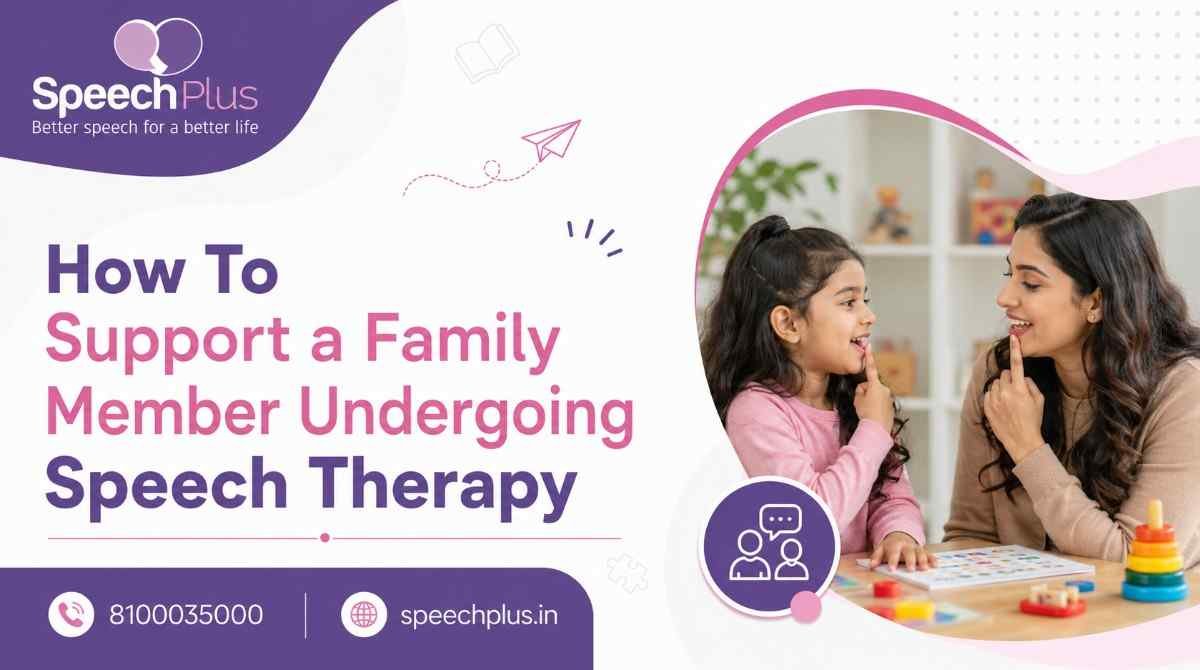
Practical Tips for Supporting Someone in Speech Therapy
Speech therapy may feel overwhelming in the initial days, and therefore, support from the family during this phase may make a big difference. When a child or an adult is on their speech therapy journey, it’s crucial to remember that progress does not just happen in a clinical setting like the therapy room. It continues at home, at school, during playtime, at the dining table, and in everyday conversations.
Undoubtedly, speech therapy sessions are highly effective, thanks to the expertise and guidance that professional speech-language pathologists bring to the table. However, to ensure a holistic development or improvement of one’s speech, language, and communication skills, caregivers must create a supportive environment at home. The consistent encouragement of family members will help the child or adult undergoing speech therapy toward improved speech and communication. This blog discusses the role of family members and the kind of home environment caregivers should create to support individuals undergoing speech therapy.
Why is Family Involvement Important in Speech Therapy?
Even if your child or adult is undergoing therapy at the most reputed clinic for speech problem treatment in Kolkata, family support can make a big difference. Speech therapy does not (and should not) stop after the therapy ends. One should maintain consistency in their practice, such as through at-home speech and language exercises, guided by parents and caregivers. When family members are involved in one’s speech therapy journey, they provide opportunities to strengthen one’s communication skills in real-life situations.
- Parents and caregivers help reinforce the skills learned in therapy sessions, which is particularly beneficial for kids to develop speech and language skills at an early age.
- Family members can use new communication techniques at home and in varying social settings (as advised by the speech pathologist).
- When families support individuals undergoing speech therapy, they feel more encouraged and confident, which reduces their anxiety or frustration about their speech problems.
- Kids or adults undergoing speech therapy can develop a stronger bond with their family members by having meaningful interactions.
- Family support ensures long-term growth because, in some complex cases, speech disorder therapy may span over months or even years.
5 Ways Family Members Can Support Kids or Adults Undergoing Speech Therapy
Here are five ways parents or family members can support speech therapy outside the therapy room.
Create a Language-Rich Environment at Home
Children or adults (especially stroke survivors) learn best through interaction and language exposure. Create a language-rich home environment to help them hear, understand, and use language confidently and naturally. For instance, parents of kids with speech or language delays often promote language development by reading books together, singing nursery rhymes or songs, and narrating or describing daily activities (such as playing, cooking, getting dressed, etc.).
Have Patience and Provide More Encouragement
Patience is the key to success. It takes time to start seeing progress in speech therapy, as it depends on the type and severity of the issue. For instance, your child who is undergoing speech delay treatment needs more love and encouragement than constant criticism or impatience. Remember that the journey is more overwhelming and challenging for your child or family member, and it’s difficult for them to deal with it alone. Celebrate the small achievements and milestones and create a safe and non-judgmental environment, enabling them to practice the recommended exercises and develop new skills.
Create a Holistic Support System
Parents or caregivers can encourage speech and language development by creating a strong support system by involving more people. For example, parents can connect with other parents and involve teachers or special educators in their child’s speech therapy journey. The idea is to involve more individuals and caregivers in their journey to help them feel more encouraged and supported, making speech therapy more effective.
Attend the Speech Therapy Sessions
Try to stay invested in the entirety of your child or family member’s speech therapy journey, including attending and participating in their therapy sessions. You also get to know what they are working on during the sessions, enabling you to track their progress, too. Besides, by getting firsthand experience of the therapy sessions, you can learn the specific exercises or techniques you need to reinforce at home for better improvement through constant practice.
Stay Connected with the Speech Therapist
Maintain open communication with your loved one’s speech therapist to track and monitor progress. You can express your concerns, ask questions, learn different at-home practice exercises, and provide your feedback to the therapist. It will help you understand the speech language therapy process and determine the specific skill development goals of the individual undergoing speech therapy. As a result, staying connected with your child/family member’s speech-language pathologist will help you understand their needs and challenges, enabling you to support them at home more effectively.
Final Words
To conclude, consistent support and encouragement from family members and caregivers help individuals undergoing speech therapy feel more confident. Connection and meaningful interactions with family members and parents will ensure better speech understanding, language and vocabulary development, and better use of non-verbal cues during conversations.
Consult a professional therapist for speech problem treatment in Kolkata to ensure measurable progress and to receive proper guidance on the exercises and techniques that need to be practised outside the therapy room. Working together enables the individual to feel more supported and reach their full potential.