
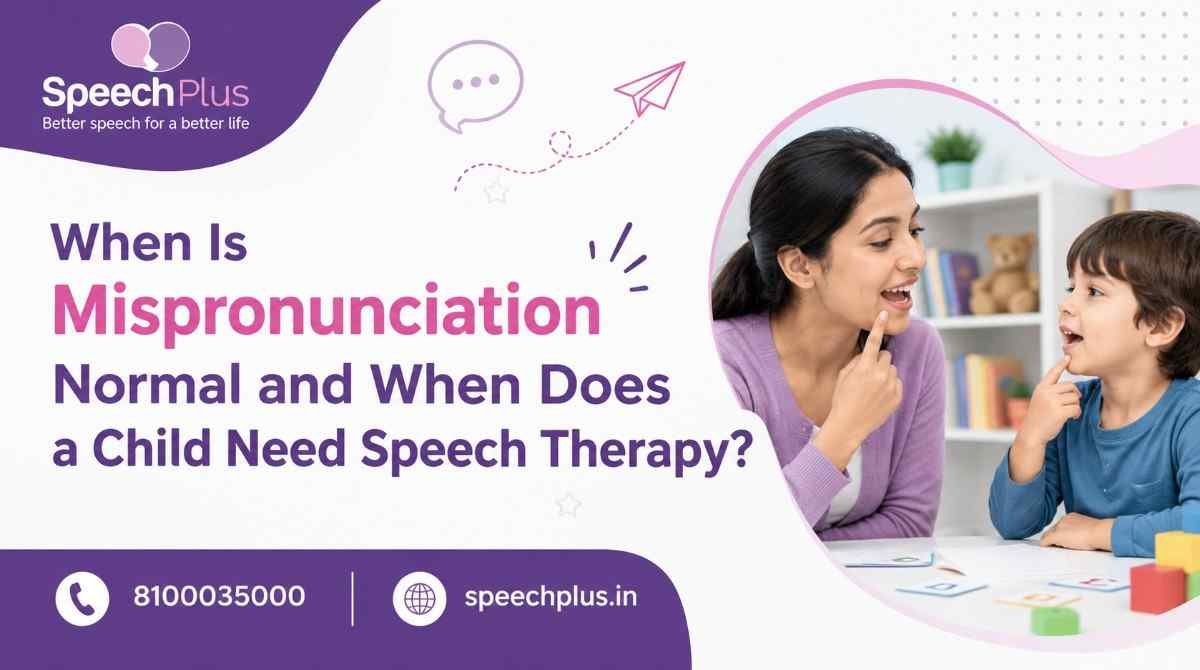
Mistakes are part of learning. When a child mispronounces a word, we might not pay attention to it. Sometimes a growing child is called a “cat” or “tat.” However, if these mispronunciations continue to grow simultaneously with their age, then it could be a little alarming to the parents.
We all know that clear speech and voice help an individual with confidence, transparency & even participation in different activities. Recognising early signs of mispronunciation can help a child towards clearer speech and more confident communication.
What Makes Some Words Difficult for Children to Pronounce?
Speaking doesn’t only mean knowing the words. Children must involve their cheeks, jaw, tongue, lips, and airflow while talking or making any sounds. As these sounds come gradually, young children may leave a sound, replace a word with one another or simply simplify it.
For instance, they call it “An” instead of “Fan” by missing the first sound. Depending on the child’s age and developmental stage, these speech sound errors may be temporary.
But if it becomes a habit or a continuous process while speaking, then ‘speech assessment‘ would be a better option.
Hearing difficulties, speech sound disorders, and challenges with coordinating speech movements can contribute to pronunciation problems. Some children with autism, Down syndrome, or other developmental conditions may also require individualised communication support.
How Can Parents Tell When Mispronunciation Is a Problem?
Every child and their growth process is different from each other. Parents should closely observe their children instead of comparing them with others.
Certain signs truly need attention, including replacing or omitting sounds, struggling with familiar words, becoming upset or misunderstood, or avoiding conversations with other children. Persistent articulation problems can sometimes affect a child’s confidence and willingness to participate in social activities.
If your child makes little progress or no progress at all with age or struggles to communicate with friends and family, it is important to consult a qualified speech-language therapist. An assessment can establish whether the difficulties are age-appropriate or require targeted intervention.
How Can Pronunciation Therapy Improve Speech?
Professional pronunciation therapy can be an effective option for a child with speech delay by applying the skills in their daily life. This process starts with a proper assessment of a child’s speech patterns, communication abilities, and specific areas of difficulty.
Therapy sessions should always be interesting so that a child never feels bored. It includes sound-based games, picture activities, listening tasks, storytelling, and guided conversation. A child who struggles with a particular word may start practising it separately before using it in a sentence.
The progress is mostly time-consuming, as it totally depends on the child’s individual needs, the nature of the difficulty, and regular practice.
What Can Parents Do at Home?
Everyday conversation must be the motto of the parents. Without correcting them in the middle of a conversation, they can indulge in reading together, describing pictures, singing songs, and talking about familiar activities.
If the child pronounces something in front of the parents while practising it, for instance, they may say “I want a tat”; you might reply, “You want the cat? “Let’s find the cat.” This approach provides a useful example without making the child feel embarrassed.
However, home activities alone may not be enough when pronunciation difficulties persist. Professional advice can help parents understand which exercises are suitable and whether structured therapy is necessary.
Get Professional Support for Your Child’s Speech Development
When inappropriate speech starts affecting personal and professional life, it can also impact mental health, so it is important to seek guidance at the earliest. A professional therapist can identify specific challenges, recommend appropriate activities, and develop a treatment-based plan.
If you are truly concerned about your child’s mispronunciation, do not rely on guesswork or wait indefinitely. Professional help can clarify the next steps.