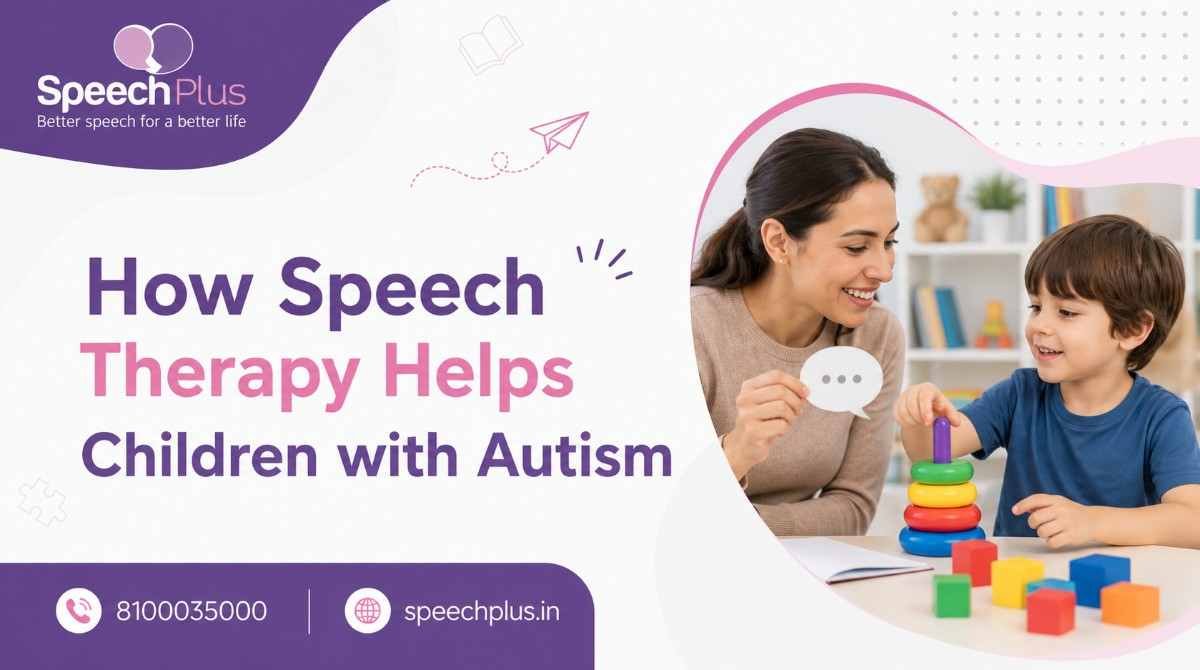
Benefits of Speech Therapy for Children with Autism
Autism, or autism spectrum disorder (ASD), encompasses a broad range of multiple disorders and a series of neurodevelopmental conditions. Since the condition manifests itself in varying symptoms and degrees of severity, there is not one type of autism – there are multiple. This is why every individual with autism is different and experiences a unique combination of social, communicational, and behavioural difficulties and challenges.
In other words, every child with autism is unique and has distinctive strengths. While some autistic individuals experience difficulties with everyday speech and understanding, others may have intellectual disabilities. While for some, it is more manageable with a few therapy sessions, for others it may be a lifelong condition, making them dependent on others. Speech therapy for autism can help children overcome communication-related challenges and develop essential communication skills based on their individual needs.
Why Is Speech Therapy Important for Children with Autism?
Communication plays an important role in a child’s overall development. It helps them express their needs, interact with others, understand instructions, participate in school activities, and build relationships. However, children with autism may experience difficulties with speech, language, social communication, or understanding and responding to others.
This is where autism speech therapy can make a significant difference. A professional speech-language pathologist assesses the child’s individual abilities and challenges and develops a personalised therapy plan to help them improve their communication skills.
Speech therapy for autism is important because of the following factors:
- Develops Speech and Language Skills
Some children with autism may have delayed speech or difficulty forming words and sentences. Speech therapy can help them gradually develop their vocabulary, sentence formation, pronunciation, and ability to communicate their thoughts and needs. For children who are non-speaking or have limited verbal communication, therapy can also focus on alternative ways of communicating, depending on their individual needs.
- Improves Communication Skills
Communication is not limited to speaking. Children also communicate through gestures, facial expressions, eye contact, body language, and other forms of interaction. Through ASD therapy, children can learn how to communicate more effectively in everyday situations. They can work on skills such as requesting something, responding to questions, following instructions, taking turns, and initiating interactions.
- Supports Social Interaction
Many children with autism experience challenges with social communication. They may find it difficult to understand social cues, start conversations, maintain interactions, or respond appropriately during social situations. A speech therapist can use age-appropriate activities, games, and role-play to help children understand these situations and gradually develop better social communication skills.
- Builds Confidence and Independence
Being unable to communicate their needs can be frustrating for children. When they learn ways to express themselves and understand others, they may become more confident in their everyday interactions. Developing communication skills can also help children become more independent by enabling them to express what they want, ask for help, make simple choices in everyday life, and participate in different activities.
Why Early Intervention is Crucial in Autism Treatment
According to research and autism specialists, the earlier a child starts therapy, the better the outcomes and improvements in crucial skill development, such as learning, speech, communication, and independence. Early intervention in autism is crucial because of the following factors.
- Brain plasticity is at its highest in the initial years: Brain plasticity, also known as neural plasticity, is the brain’s ability to change and adapt to new skills and knowledge, which occurs during a child’s early years. Delaying the process may deprive the child of their crucial learning and skills acquisition.
- Prepares kids for school and beyond: Early therapy and support enable kids to develop the learning skills they need in a classroom setting, setting a strong foundation to help them perform their best in academics.
- Developing skills step-by-step: Progress is faster with early intervention, especially when it occurs in baby steps, making the process more manageable. Be it developing speaking skills, learning through play, or understanding social cues – early therapy helps build confidence and ensures success in the future.
- Boosts confidence for parents and caregivers: Early intervention enables parents and families to learn different techniques to manage various learning challenges. They can also learn ways to help them cope with difficulties and encourage their growth and development.
How Can a Speech-Language Pathologist Help?
A professional speech-language pathologist (SLP) evaluates a child’s speech, language, and communication abilities and identifies areas that may require support. Based on the assessment, the SLP can develop an individualised therapy plan. The approach may include speech and language activities, play-based learning, social communication exercises, and strategies that parents and caregivers can continue at home.
The involvement of parents is also crucial, as they provide emotional support and organised care in daily life. They can learn different techniques to encourage communication and support their child’s progress in everyday situations. Parents can also establish predictable, achievable routines to reduce anxiety and encourage communication using visual aids.
The Bottom Line
To sum up, although early intervention does not guarantee a complete “cure” for autism, it can bring about significant changes by equipping the child with tools to live a happier, successful, and independent life. With the right speech therapy for autism, children can gradually develop valuable communication skills and gain greater confidence in expressing themselves and connecting with the world around them.